The Psychology of Quality and More
|
|
The Psychology of Quality and More |
|
A Toolbook for Quality Improvement and Problem Solving (contents) |
Flowchart: Practical variationsThe Quality Toolbook > Flowchart > Practical variations When to use it | How to understand it | Example | How to do it | Practical variations
Practical variations
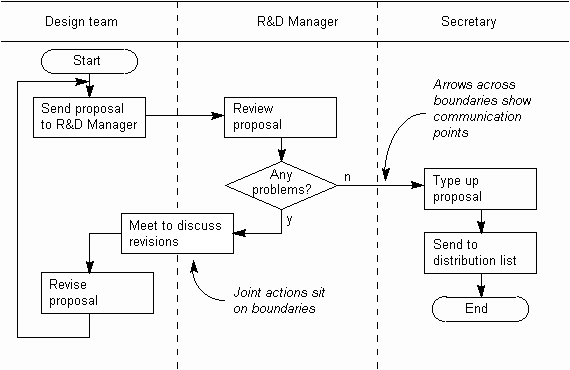
This is particularly useful for process improvement as problems often lie in the communications boundary between individual people. It can, however, only be used for relatively simple Flowcharts, as the width available for each person is severely limited.
Fig. 1. Deployment Flowchart
|
Site Menu |
|
Quality: | Quality Toolbook | Tools of the Trade | Improvement Encyclopedia | Quality Articles | Being Creative | Being Persuasive | |
|
And: | C Style (Book) | Stories | Articles | Bookstore | My Photos | About | Contact | |
|
Settings: | Computer layout | Mobile layout | Small font | Medium font | Large font | Translate | |
You can buy books here |
|
And the big |