The Psychology of Quality and More
|
|
The Psychology of Quality and More |
|
A Toolbook for Quality Improvement and Problem Solving (contents) |
Prioritization Matrix: Practical variationsThe Quality Toolbook > Prioritization Matrix > Practical variations When to use it | How to understand it | Example | How to do it | Practical variations
Practical variations
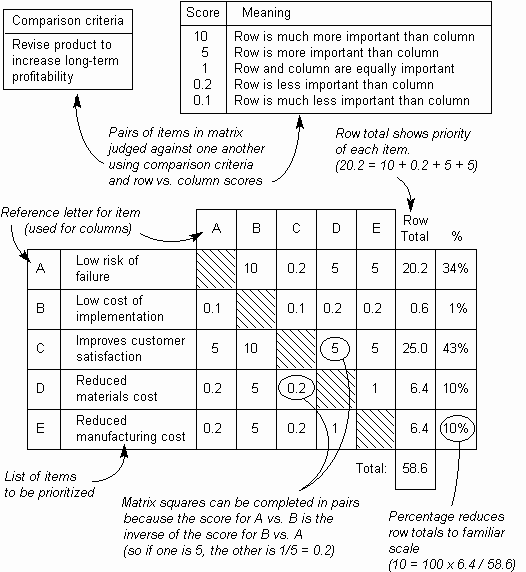
The process is described below (and illustrated in Fig. 1): 10 = Row item is much more important than column item 5 = Row item is more important than column item 1 = Row item is equally important to column item 0.2 = Row item is less important than column item 0.1 = Row item is much less important than column item
Squares may be done in diagonally opposite pairs, as if A versus B scores 5 then B versus A must score 0.2. Note that as with other scoring schemes, use of real data will give much better results than subjective guesses.
Fig. 1. Full Analytic Criteria Method
|
Site Menu |
|
Quality: | Quality Toolbook | Tools of the Trade | Improvement Encyclopedia | Quality Articles | Being Creative | Being Persuasive | |
|
And: | C Style (Book) | Stories | Articles | Bookstore | My Photos | About | Contact | |
|
Settings: | Computer layout | Mobile layout | Small font | Medium font | Large font | Translate | |
You can buy books here |
|
And the big |