The Psychology of Quality and More
|
|
The Psychology of Quality and More |
|
A Toolbook for Quality Improvement and Problem Solving (contents) |
Process quality and ETVXThe Quality Toolbook > Processes > Process quality and ETVX
Quality in the processA quality process has the right inputs and performs the right actions to produce outputs that meet the needs of customer processes. Definitions of quality thus include:
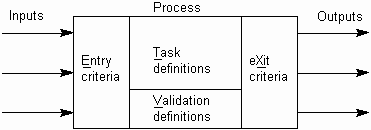
ETVXThere are four places where the quality can be specified and checked:
Together, these make up what is known as the ETVX model (as below), which can be used to define the process and the quality required within it completely.
Fig. 1. The ETVX model
In process improvement, it can be useful to apply this model to processes that are suspected of being troublesome, in order to identify measures to identify specific problems.
|
Site Menu |
|
Quality: | Quality Toolbook | Tools of the Trade | Improvement Encyclopedia | Quality Articles | Being Creative | Being Persuasive | |
|
And: | C Style (Book) | Stories | Articles | Bookstore | My Photos | About | Contact | |
|
Settings: | Computer layout | Mobile layout | Small font | Medium font | Large font | Translate | |
You can buy books here |
|
And the big |