The Psychology of Quality and More
|
|
The Psychology of Quality and More |
|
A Toolbook for Quality Improvement and Problem Solving (contents) |
Matrix Diagram: ExamplesThe Quality Toolbook > Matrix Diagram > Examples When to use it | How to understand it | Example | How to use it | Practical variations
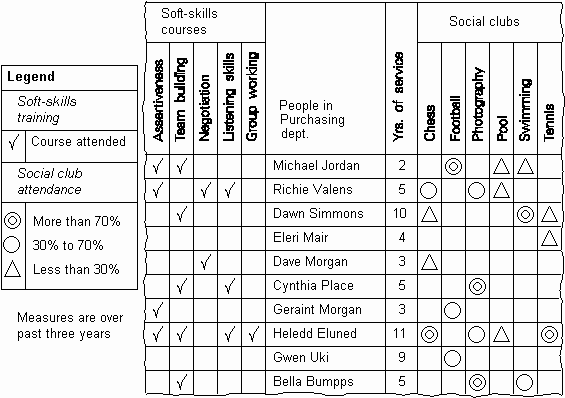
ExampleA personnel department wanted to improve social activity within the company in order to increase loyalty levels. A theory was put forwards that soft-skills training contributed significantly towards this in-house socializing. The personnel manager consequently decided to use a Matrix Diagram to investigate this. The steps taken were:
The resultant matrix, as shown below showed that people with higher levels of social training also tended to be more committed members of social clubs. It was also noticed that there seemed to be a particular increase in commitment after going on the team-building course. The length of service showed no particular pattern.
Fig. 1. Building the example Matrix Diagram
Other examples
|
Site Menu |
|
Quality: | Quality Toolbook | Tools of the Trade | Improvement Encyclopedia | Quality Articles | Being Creative | Being Persuasive | |
|
And: | C Style (Book) | Stories | Articles | Bookstore | My Photos | About | Contact | |
|
Settings: | Computer layout | Mobile layout | Small font | Medium font | Large font | Translate | |
You can buy books here |
|
And the big |