The Psychology of Quality and More
|
|
The Psychology of Quality and More |
|
A Toolbook for Quality Improvement and Problem Solving (contents) |
String Diagram: How to understand itThe Quality Toolbook > String Diagram > How to understand it When to use it | How to understand it | Example | How to do it | Practical variations
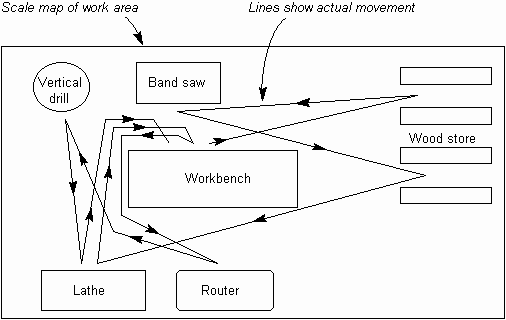
How to understand itThe placement of equipment and furniture in work areas is often done randomly and sequentially, rather than with any sense of what positioning will make the work easier. The result is that subsequent work requires much more moving about than is necessary. A part of the problem is that when designing a work area, it can be difficult to 'see' what movement will be necessary. The String Diagram is a simple tool for analyzing and designing work spaces such that movement can be minimized. The basic diagram simply consists of a map of the work area, with the actual movements drawn on top, thus:
Fig. 1. String Diagram
It is common to also indicate type of actions being done at each point. This is typically done using the same symbol set that is used in the Flow Process Chart. When analyzing the diagram, both the positioning of equipment and the sequencing and detail of actions may be considered. A simple revision of the process may enable the distance moved to be significantly reduced (this may well be preferable to moving heavy equipment around).
|
Site Menu |
|
Quality: | Quality Toolbook | Tools of the Trade | Improvement Encyclopedia | Quality Articles | Being Creative | Being Persuasive | |
|
And: | C Style (Book) | Stories | Articles | Bookstore | My Photos | About | Contact | |
|
Settings: | Computer layout | Mobile layout | Small font | Medium font | Large font | Translate | |
You can buy books here |
|
And the big |