The Psychology of Quality and More
|
|
The Psychology of Quality and More |
The Social Success of Six Sigma~ David Straker ~
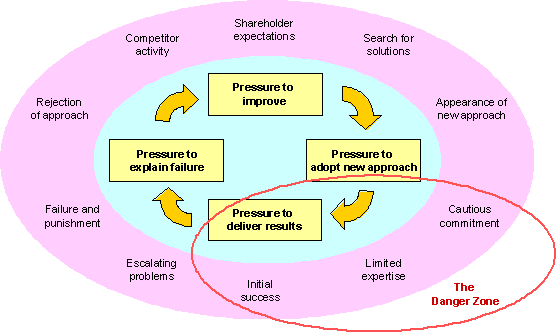
-- Introduction -- Creating commitment -- A truer understanding -- References -- -- Print-friendly one-page -- IntroductionSix Sigma has a curious reputation. In some places it appears almost as 'religion', whilst others discount it as 'nothing new'. Yet it is difficult to deny the success that this approach seems to have had. Clearly, then, something different is happening. If the methods are not new, then it follows that something else is happening to make it successful. The difference that makes Six Sigma a success is that it manages the danger zone and thus avoids the fad cycle (See Figure 1 and Breaking the Fad-Failure Cycle). This occurs both in the high level of commitment it consistently demands, and in the depth of understanding that it uses to ensure real improvements are made. Paradoxically, much of the success of Six Sigma is due to the fact that it actively manages these 'soft' social factors, despite having a brand image of being a 'hard' scientifically-based methodology.
Figure 1. The Fad-Failure Cycle
|
Site Menu |
|
Quality: | Quality Toolbook | Tools of the Trade | Improvement Encyclopedia | Quality Articles | Being Creative | Being Persuasive | |
|
And: | C Style (Book) | Stories | Articles | Bookstore | My Photos | About | Contact | |
|
Settings: | Computer layout | Mobile layout | Small font | Medium font | Large font | Translate | |
You can buy books here |
|
And the big |